

Photo by Pixabay on Pexels.com
A well-known piece of advice for authors is “Write what you know.” In a culture in which so many people have suffered as legitimate victims due to the actions or choices of someone else, is there room for writers whose personal suffering is more like personal discomfort, because it pales in comparison to that of so many others? I’ve noticed that many of the highest-profile Christian bloggers have endured heart-wrenching pain from the death of a spouse, child, or marriage and openly share their grief, pain, and struggles.
I have had few experiences with deep grief, very little physical pain, and few struggles. I was one of the 5% of white students in a historically black university in the late ’60s. In my speech class, other students were brave young (!) Vietnam combat veterans, brave young adults who had participated in civil rights marches, and brave students whose homes were in the toughest parts of big cities where crime was the usual backdrop. I had experienced none of that. Enrolling there as a white minority student was the bravest thing I had ever done, and that didn’t seem brave at all at the time–it was just the most convenient place to get a particular degree I wanted.
In the required speech class, I got B after B on my speeches, and I wanted A’s. I had won a state qualifier, then a national public speaking competition, and I believed I could address an audience well. I didn’t think the professor was prejudiced against me because of my race, but I did think that he was grading at least partly on the inherent significant drama of the topics presented in the other students’ first-person speeches, rather than the presentation criteria of the speeches themselves. I could not compete with those experiences as topics, but I did think I could compete on presentation; so I talked to him about it. He was surprised and receptive when I respectfully asked him if the dramatic experiences the other students were relating might be negatively impacting his impression–and my grades–by comparison, and he agreed to consider the possibility. After that, the speeches I carefully planned and presented well did earn A’s.
As an author of fiction, however, I can’t go to the reader and say, “I couldn’t make this more compelling because I haven’t experienced anything like it, either as a victim or a perpetrator.” Readers WILL compare my prose to that of others, with no consideration at all of where the knowledge originated. I am awed by those in my own family who minister to victims AND to perpetrators of crimes on a daily basis, but I can only understand sympathetically, not empathetically. I tend to avoid having anyone in my stories experience excruciating pain, physical or emotional, because I have to fight feeling like an impostor when I do write about it. By the grace of God, I have had no experiences like that.
What do YOU think? Do authors who write about tough topics they haven’t personally experienced have the same level of credibility as those who have lived through them?


 After many years of teaching at the college level, I earned a doctorate in teaching and learning, then took early retirement and started a second career. I coach doctoral scholars as they design their research, then serve as their teacher and editor while they write the dissertation. Completing years of doctoral course work makes scholars experts in their fields, but it doesn’t guarantee skill in writing a dissertation. Some clients realize that and take full advantage of all the expertise I can give them. Others hire me, then argue with me, doubt my recommendations, question my corrections, ignore my instructions, and essentially go through the whole process kicking and screaming, figuratively speaking, resisting me all the way.
 I have read reams of text, some comical, some cautionary, written by deft writer-jugglers who wrote while also doing something else–working as a chef, caring for small children, teaching all day and writing half the night. The greatest challenge in keeping everything going at once was prioritizing.
  In July our older daughter and her family moved 850 miles from our city to Charlotte, NC, and she was invited to speak at the farewell dinner for them at our church. She used the theme of 9 months. She and her husband got their daughter nine months after they committed to adopt their first child; she carried each of the other three children for nine months (more or less); and the short stay they expected here in Quincy, Illinois, between her husband’s previous ministry in the Austin neighborhood of Chicago and his next pastorate became–yes, 9 months.
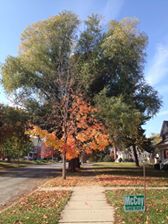 Today is November 14, and I considered mowing the lawn–it needs it. My vegetable garden is still producing peppers, and my zinnias are still blooming. This is Central Illinois! The trees are so confused that some are still green, some are bright colors, and some have shed their leaves. Some are doing all three at once. I’ve felt like that myself–not quite sure what stage of life I’m in. Having one of those landmark birthdays last month didn’t help.
 Several years ago I decided to disguise the cyclone fence surrounding my vegetable garden by planting morning glories that would vine on it. I planted the seeds, and they sprouted, and they grew, and the vines did, indeed, cover the ugly fence, and the flowers greeted me every morning that summer. And the next. And the next. And the next. Morning glories are persistent.
 I strongly believe that virtually everything we perceive is affected by its context, and we ignore that at our own peril. But being aware of our context does not mean allowing it to dictate our actions or responses.

 Linda Riggs Mayfield